


Tax Day Countdown and Important Tax Deadlines!
Learn moreStarting a New Business: Your Step-by-Step Guide
Starting a new business is exciting, but the early decisions can feel crowded: idea validation, legal setup, money, marketing, tools, and day-to-day operations all compete for attention. The best approach is to move in a practical order: prove the idea, protect yourself legally, organize finances, then launch with a simple system for getting and serving customers. This guide walks through the first steps to creating a business so you can build momentum without overcomplicating the process.
What should you do first when starting a new business?
Start by confirming that people actually want what you plan to sell. Before you register a name, order inventory, or invest heavily in branding, test whether your offer solves a real problem for a specific group of customers. A strong new business startup begins with evidence, not just enthusiasm.
Look at your idea from three angles: the customer, the problem, and the payment. Who needs this? Why would they choose you? What would they realistically pay, and how often? These questions help you avoid building something impressive that no one urgently wants.
Useful validation methods include:
Customer interviews: Speak with people who match your ideal buyer and ask about their needs, habits, frustrations, and current alternatives.
Simple surveys: Use short forms to test interest, price sensitivity, and buying triggers.
Competitor research: Study similar offers, reviews, pricing, positioning, and gaps customers complain about.
Pre-launch tests: Try a waitlist, sample service, prototype, landing page, or limited offer before committing major resources.
Secondary research: Review public data, industry reports, and local market information to understand demand and trends.
If you are exploring small business enterprise ideas, do not judge only by what sounds profitable. Judge by fit: your skills, available time, startup cost, customer access, and ability to deliver consistently.
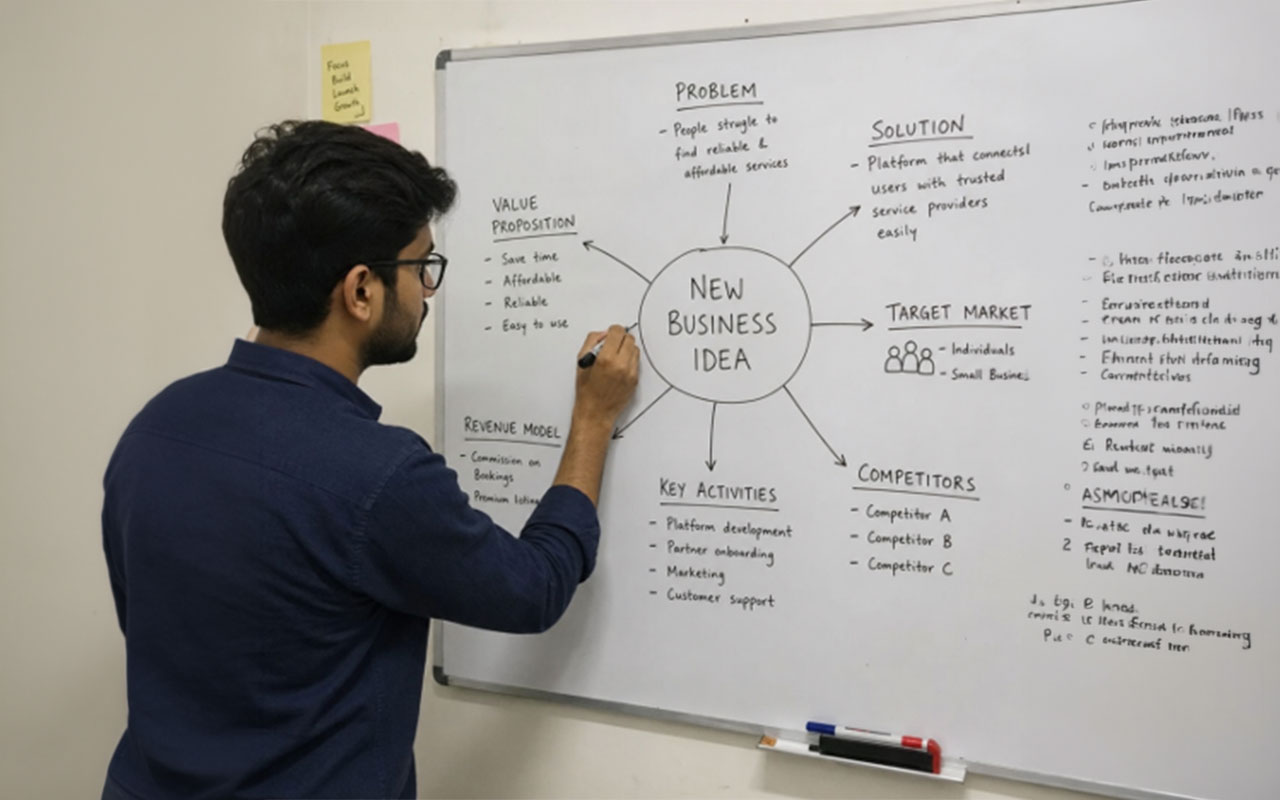
Shape the idea into a workable business model
Once the idea shows promise, turn it into a basic business model. This does not need to be a long formal document at first. It should explain what you sell, who you sell to, how you reach them, how you deliver value, and how the business earns enough to survive.
Many people searching for how to make a small business skip this step because they want to “just start.” Starting is good, but a simple plan prevents scattered spending and unclear priorities. It also makes conversations with lenders, partners, vendors, and early hires much easier.
A lean business plan should cover:
Offer: What product or service will you sell first?
Audience: Who is the best-fit customer, and what problem are they trying to solve?
Positioning: Why should someone choose you instead of an existing option?
Sales channels: Will you sell online, locally, through referrals, at events, through partners, or in a physical location?
Costs: What must you spend before launch, and what will recur monthly?
Revenue: What will you charge, and how many sales do you need to cover costs?
Operations: What tools, suppliers, people, and processes are needed to deliver reliably?
This is also the point where small business ideas become more realistic. A home-based consulting service may need little more than a website, basic software, and a clear offer. A retail shop, restaurant, or product company may require rent, permits, inventory, insurance, equipment, and more working capital.
How can I set up a business legally?
To set up a business legally, choose a business structure, register where required, get tax identification if needed, open separate financial accounts, and confirm licenses or permits for your industry and location. The exact requirements vary, but the sequence is usually similar for most business start ups. Legal setup is not just paperwork; it affects taxes, liability, hiring, banking, and how easily the business can grow.
Common business structures include sole proprietorships, partnerships, limited liability companies, and corporations. A sole proprietorship is often simple, but it may not separate personal and business liability. An LLC or corporation can offer more structure, though it may involve more filing and maintenance. If you are unsure which structure fits, get guidance from a qualified professional before making the decision.
Your legal and administrative checklist should include:
Choose a business name: Make sure it is available and does not conflict with another company in your market.
Select a structure: Consider liability, taxes, ownership, paperwork, and future growth.
Register the business: File with the appropriate state or local office when required.
Apply for an EIN if needed: An employer identification number is commonly used for taxes, hiring, and business banking.
Check licenses and permits: Requirements can depend on your city, state, industry, and activities.
Set up tax accounts: Understand sales tax, income tax, payroll tax, and estimated payments if they apply.
Open a business bank account: Keep business and personal money separate from the beginning.
Consider insurance: General liability, professional liability, property, workers’ compensation, or other policies may be relevant.
This is where a casual business startup business idea becomes a formal operation. Even if you are starting small, clean records and proper registration reduce confusion later.
Build a realistic startup budget
Money does not need to be perfect on day one, but it does need to be visible. A startup budget helps you understand what it will cost to open, operate, and survive while sales are still uncertain. Without one, it is easy to underestimate basic expenses and run out of cash before the business has a fair chance.
Separate your costs into three groups. First are one-time startup costs, such as registration fees, equipment, branding, website setup, initial inventory, lease deposits, or professional help. Second are monthly operating costs, including software, rent, utilities, marketing, payroll, insurance, supplies, and loan payments. Third is personal runway, the money you need to cover your own living expenses while the business grows.
Funding options may include:
Bootstrapping: Using personal savings or early revenue to grow carefully.
Friends and family funding: Helpful for some founders, but best handled with written terms.
Small business loans: Useful when you can show repayment ability and a clear plan.
SBA-backed loans: A possible option for qualified borrowers through participating lenders.
Crowdfunding: Works best when you have a compelling product, audience, and story.
Angel investors or venture capital: More common for companies with high-growth potential.
Grants: Often limited, competitive, and tied to specific groups, industries, or purposes.
The safest path is usually to spend in stages. Test demand before signing expensive leases, buying large inventory, or hiring too quickly. A smaller launch can teach you what customers value before you lock yourself into costly assumptions.
Create a simple brand and marketing engine
Marketing does not have to begin with a big campaign. It begins with clarity: what you do, who you help, and why your offer matters. If someone lands on your website, social profile, flyer, or store page, they should understand the value within seconds.
Start with a basic brand foundation. Choose a name, visual style, tone, and message that fit your audience. Then create a practical online presence: a website or landing page, a business email, search-friendly service or product pages, and the social channels your customers actually use. You do not need to be everywhere; you need to be visible where buying decisions happen.
Early marketing activities that work for many small businesses include:
Asking satisfied early customers for reviews or referrals.
Publishing helpful content that answers common customer questions.
Building an email list instead of relying only on social media reach.
Networking with complementary businesses or local organizations.
Offering a limited launch promotion without training customers to expect constant discounts.
Tracking which channels bring inquiries, sales, and repeat customers.
If you are learning how to start a small business, remember that marketing is not separate from operations. Your delivery, follow-up, packaging, response time, and customer service all shape whether people come back or recommend you.

Set up operations before growth gets messy
Operations are the systems that help you deliver consistently. They include how you handle orders, appointments, payments, communication, customer records, inventory, documents, and follow-up. You can start simple, but you should not start disorganized.
Technology can make a small team feel more capable. A customer relationship management system can track leads and follow-ups. Accounting software can organize income and expenses. Scheduling tools reduce back-and-forth messages. AI marketing assistants can help draft content ideas, email outlines, product descriptions, or customer service templates, though anything customer-facing should still be reviewed for accuracy and tone.
Create lightweight procedures for tasks you repeat often. For example, write down how a new inquiry is handled, how an order is fulfilled, how invoices are sent, and how customer complaints are escalated. These simple notes become training materials if you later hire help.
Avoid the mistakes that slow new businesses down
Most early mistakes are not dramatic; they are small gaps that compound. Founders spend too much before validation, mix personal and business finances, ignore compliance, underprice their work, or depend on one marketing channel. These issues can make a promising company feel unstable.
Watch for these common problems:
Skipping market research: Passion matters, but customer demand keeps the doors open.
Overbuilding too soon: Start with the simplest sellable version before investing heavily.
Poor cash tracking: Review revenue, expenses, taxes, and upcoming bills regularly.
Unclear pricing: Include labor, materials, overhead, taxes, and profit margin.
Compliance oversights: Revisit licenses, renewals, insurance, and tax obligations as you grow.
No customer follow-up: Repeat business is often easier to earn than brand-new attention.
The goal is not to avoid every mistake. It is to build feedback loops so you notice problems early and adjust before they become expensive.
Turn the first launch into steady progress
Launching is not the finish line; it is the beginning of better information. Once real customers interact with your offer, you will learn which messages resonate, which products sell, which processes break, and which expenses are worth keeping. Treat the first few months as a learning cycle.
A practical launch rhythm looks like this:
Sell a focused offer to a defined audience.
Track every lead, sale, cost, and customer question.
Ask buyers what almost stopped them from purchasing.
Improve the offer, pricing, page copy, and delivery process.
Repeat what works and cut what drains time without results.
This approach keeps the business moving without pretending everything must be perfect. Whether you are exploring small business ideas or already preparing documents, the strongest first step is disciplined action.
Starting a new business becomes less overwhelming when you break it into decisions you can handle one at a time. Validate the idea, choose the right structure, organize your finances, build a clear market presence, and create simple systems before chasing scale. Do those basics well, and your business has a stronger foundation for the challenges and opportunities ahead.